
Imagine the rhythmic, intoxicating beat of the dhaak (traditional drums) vibrating through the crisp autumn air. The smell of fresh shiuli flowers blends seamlessly with the aroma of hot mutton rolls and freshly fried ghugni on every street corner. Millions of dazzling, synchronized LED lights turn the night sky into a glowing canvas. Welcome to the world’s largest open-air art festival: Kolkata’s Durga Puja.
For anyone planning to experience this UNESCO Intangible Cultural Heritage event, a classic debate inevitably arises: North vs. South Kolkata Durga Puja.
Should you explore the old-world lanes of the North, where historic bonedi bari (aristocratic family) mansions host centuries-old rituals? Or should you immerse yourself in the high-budget, avant-garde spectacles of the South, where massive North vs. South Kolkata Durga Puja pandal creative themes push the boundaries of architectural imagination?
Trying to navigate both zones without a strategic game plan can lead to hours stuck in traffic or exhausted feet before you even glimpse the goddess. This comprehensive guide breaks down the core differences between the two regions and provides a bulletproof, optimized route map to help you conquer pandal hopping like a local.
The Core Philosophy: Understanding the Battle of the Zones
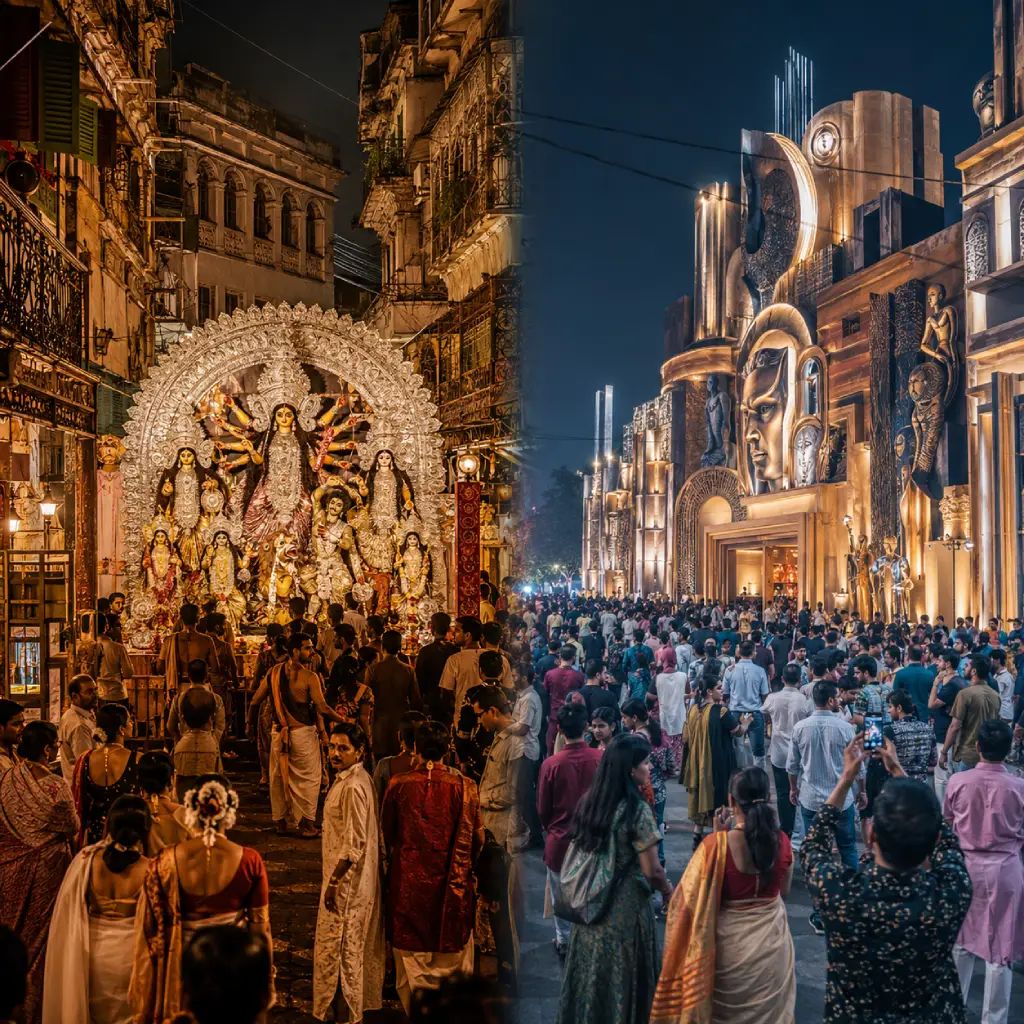
To truly appreciate the festival, you have to understand that North and South Kolkata approach Durga Puja with completely different cultural mindsets. It isn’t just a geographic split; it’s a lifestyle divide.
North Kolkata: Heritage, History, and Nostalgia
The North is the soul of old Calcutta. Here, community celebrations (known as Barowari pujas) have been held in the same neighborhood squares for over a hundred years. The atmosphere is deeply traditional, historical, and nostalgic.
The artistic emphasis here is heavily placed on Shabkiata—traditional, aristocratic elegance. You will find majestic Ekchala idols, where the Goddess and her children are framed within a single, magnificent decorative arch, decorated with classic silver foil embroidery (daaker saaj). Navigating this zone means walking through narrow, tightly packed residential lanes that feel like stepping back into the 19th century.
South Kolkata: Innovation, Scale, and Theme Culture
The South is the powerhouse of contemporary “Theme Pujas.” In this part of the city, neighborhoods compete fiercely to create mind-bending, immersive environments that feel highly contemporary, artistic, and energetic.
Entire world monuments are replicated down to the millimeter, or everyday objects—like clay cups, safety pins, or eco-friendly ropes—are used to build massive, abstract structural installations with multi-million rupee budgets. The conceptual, experimental shapes of the idols address everything from environmental climate change to global peace, transforming the broad avenues and sprawling setups of the South into a contemporary art gallery.
The Ultimate North Kolkata Pandal Hopping Route Map (Day 1)
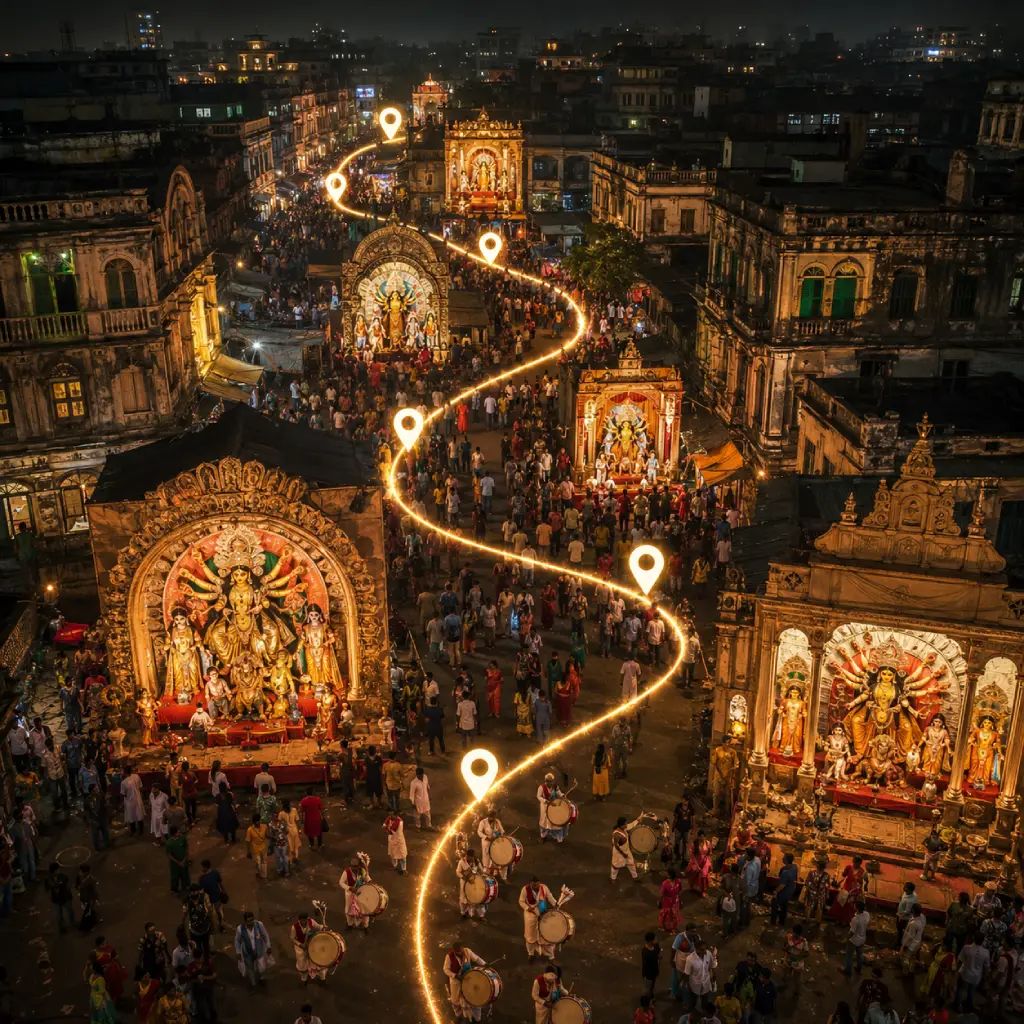
The narrow alleys of North Kolkata are best experienced using the city’s Lifeline: the Kolkata Metro. This route is highly concentrated, allowing you to walk between several iconic setups.
Stop 1: Sreebhumi Sporting Club (The Gateway)
-
Nearest Metro/Access: Ultadanga / VIP Road
-
What to expect: Known for grand, jaw-dropping scale, this pandal often replicates massive palatial structures, such as Indian temples or historic monuments, glittering with incredible lighting schemes.
Stop 2: Tala Prattoy & Bagbazar Sarbojanin
-
Nearest Metro: Shyambazar
-
What to expect: After checking out the high-concept installations at Tala Prattoy, take a short walk to Bagbazar Sarbojanin. This is a legendary centenary puja that has preserved the exact same classical idol design, traditional color palette, and spiritual framework for generations.
Stop 3: Kumartuli Park & Ahiritola Sarbojanin
-
Nearest Metro: Sovabazar Sutanuti
-
What to expect: Kumartuli is the historic pottery quarter where the clay idols are born. The neighborhood puja seamlessly blends this local artisanal heritage into its structures. Neighboring Ahiritola offers a beautiful mix of musical heritage and massive, colorful installations.
Stop 4: Kashi Bose Lane & Hatibagan Sarbojanin
-
Nearest Metro: Shyambazar
-
What to expect: Kashi Bose Lane is a masterclass in navigating tight spaces. Tucked inside narrow residential lanes, this committee creates deeply personal, thematic, and intricate art environments that draw huge crowds every year.
The Ultimate South Kolkata Pandal Hopping Route Map (Day 2)
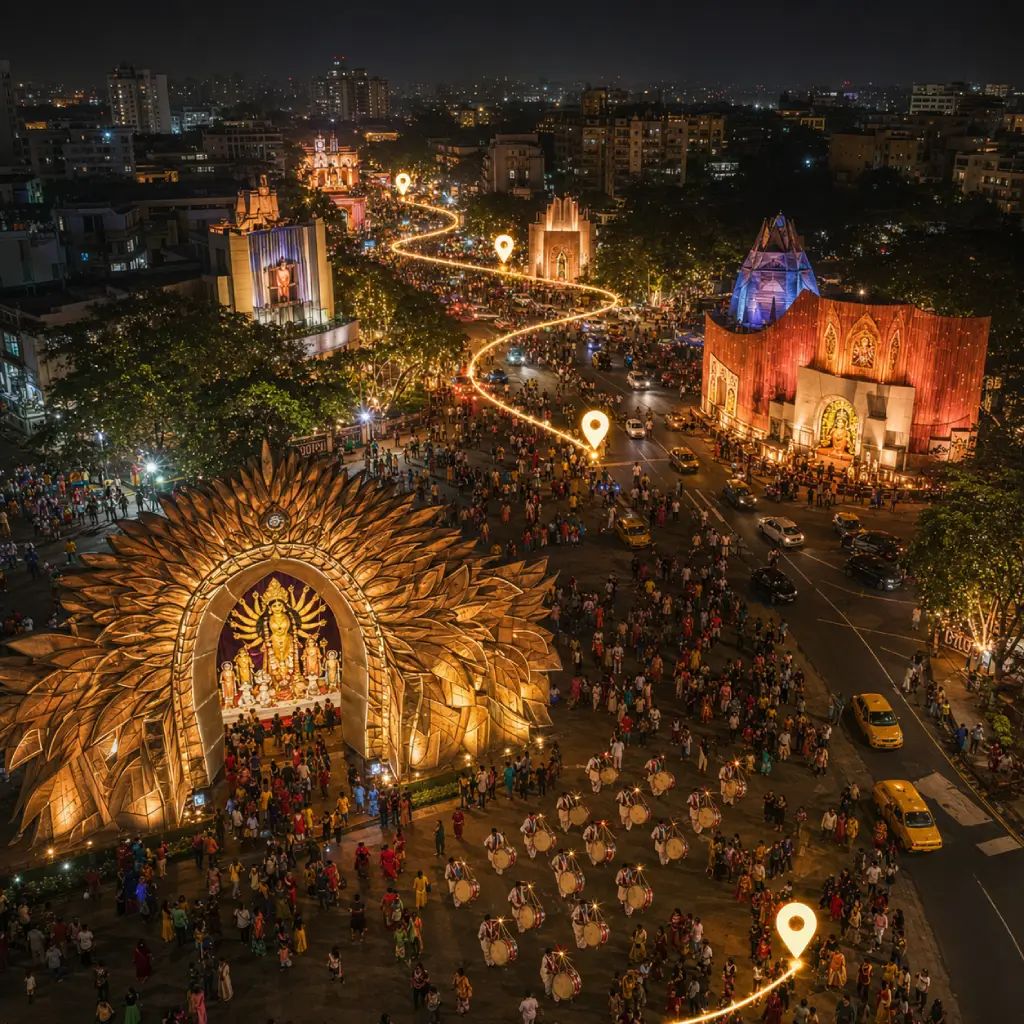
South Kolkata features wider avenues, making it ideal for a mix of walking and utilizing app-based cabs or public transit loops.
Stop 1: Suruchi Sangha (New Alipore)
-
Nearest Metro: Taratala / Kalighat
-
What to expect: Suruchi Sangha is famous for crafting its entire theme around different states of India or social messages. Everything from the structural materials to the music and the attire of the idol reflects a specific regional culture.
Stop 2: Mudiali Club & Shibmandir
-
Nearest Metro: Rabindra Sarovar
-
What to expect: Located very close to each other near the Lakes, Mudiali Club focuses heavily on exquisite, traditional craftsmanship blended with dazzling, synchronized illumination work.
Stop 3: Ekdalia Evergreen Club & Singhi Park (Gariahat Belt)
-
Nearest Metro: Kalighat
-
What to expect: These two friendly rivals sit right across the main road from each other. Ekdalia Evergreen is famous for replicating massive, authentic Indian temples using intricate cloth work, lit by towering chandeliers. Singhi Park counters with brilliant architectural precision and gorgeous, classical forms of the Goddess.
Stop 4: Jodhpur Park & Ballygunge Cultural Association
-
Nearest Metro: Dhakuria (Railway) / Tollygunge
-
What to expect: This cluster represents the pinnacle of artistic thought. The pandals here function as moving, visual poetry, using shifting lighting concepts and custom acoustic soundscapes to tell deep spiritual stories.
Survival Secrets: Navigating the Festive Chaos
Pandal hopping across the city during the festive season requires physical endurance and smart planning. Keep these local insider tips in mind:
-
Timing is Everything: To beat the massive evening foot traffic, do a morning loop (8:00 AM to 12:00 PM). The morning sun offers excellent visibility for photographs, and you can view the craftsmanship up close without waiting in kilometer-long queues. The night loop (8:00 PM onwards) is best for experiencing the incredible lighting work.
-
Footwear is Non-Negotiable: You will easily log 15,000 to 20,000 steps a day. Skip the stylish heels or stiff new shoes; opt for breathable, well-cushioned running shoes or comfortable walking sandals.
-
Hydration & First Aid: Pack a small backpack with a reusable water bottle, wet wipes, hand sanitizer, and a few basic medications for acidity or headaches.
-
Rely on the Metro: Road traffic during the festival can come to an absolute standstill due to police diversions. The underground Metro runs extended schedules (often all night long during peak days) and is the fastest way to travel between the North and South zones.
For a deeper dive into organizing your itinerary, check out our comprehensive Kolkata Durga Puja Visit Guide.
Frequently Asked Questions (FAQs)
Which is better: North or South Kolkata Durga Puja?
Neither is objectively better; it depends entirely on your personal taste! If you love deep-rooted history, old-world architecture, and traditional rituals, you will prefer North Kolkata. If you are a fan of modern art installations, spectacular scale, and avant-garde creative themes, South Kolkata will blow you away.
What is the best way to travel between pandals?
The absolute best option is the Kolkata Metro for north-south transit. For local movement within a specific cluster, walking is often faster than taking a car due to festive road closures. For longer hops outside the metro line, utilizing shared auto-rickshaws or app-based cabs is recommended.
How many days are required to see all the major pandals?
To properly experience the main highlights without burning out, you need at least 3 full days. Dedicate Day 1 to the historic North, Day 2 to the creative South, and Day 3 to the massive, grand spectacles in Eastern extensions like Salt Lake and Lake Town.
Conclusion: Craft Your Unforgettable Festive Journey
Kolkata’s Durga Puja is more than just a religious festival; it is a profound celebration of community, art, and shared humanity. Whether you find yourself lost in the nostalgic, candle-lit warmth of a North Kolkata mansion or standing awestruck beneath a glowing, futuristic tower in the South, the energy of the city will stay with you long after the idols are immersed.
Ready to start planning your dream festive itinerary? Explore more neighborhood maps, real-time traffic crowd updates, and culinary guides over at Durga Puja Kolkata. Grab your most comfortable walking shoes, round up your favorite people, and dive headfirst into the magic of the City of Joy!


